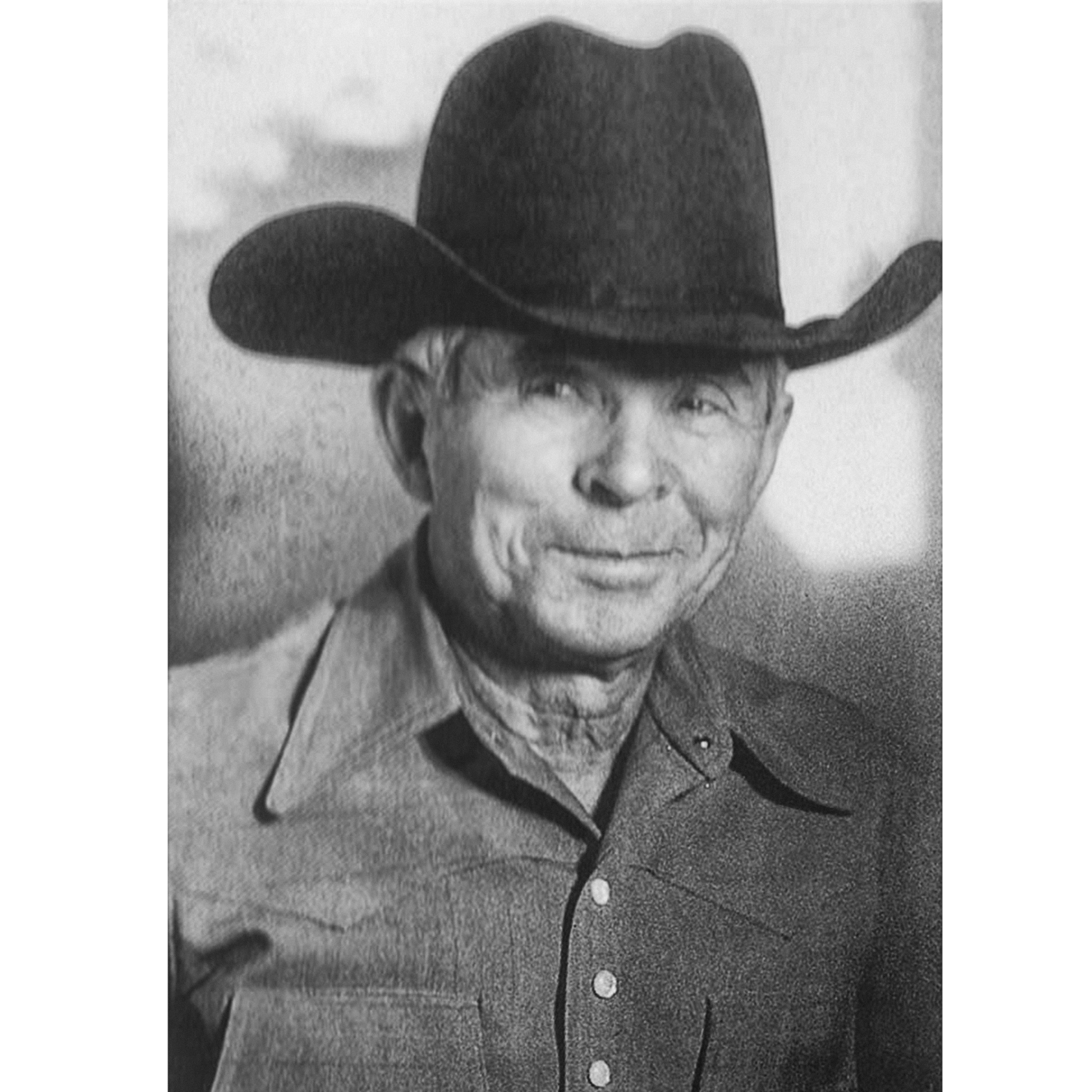
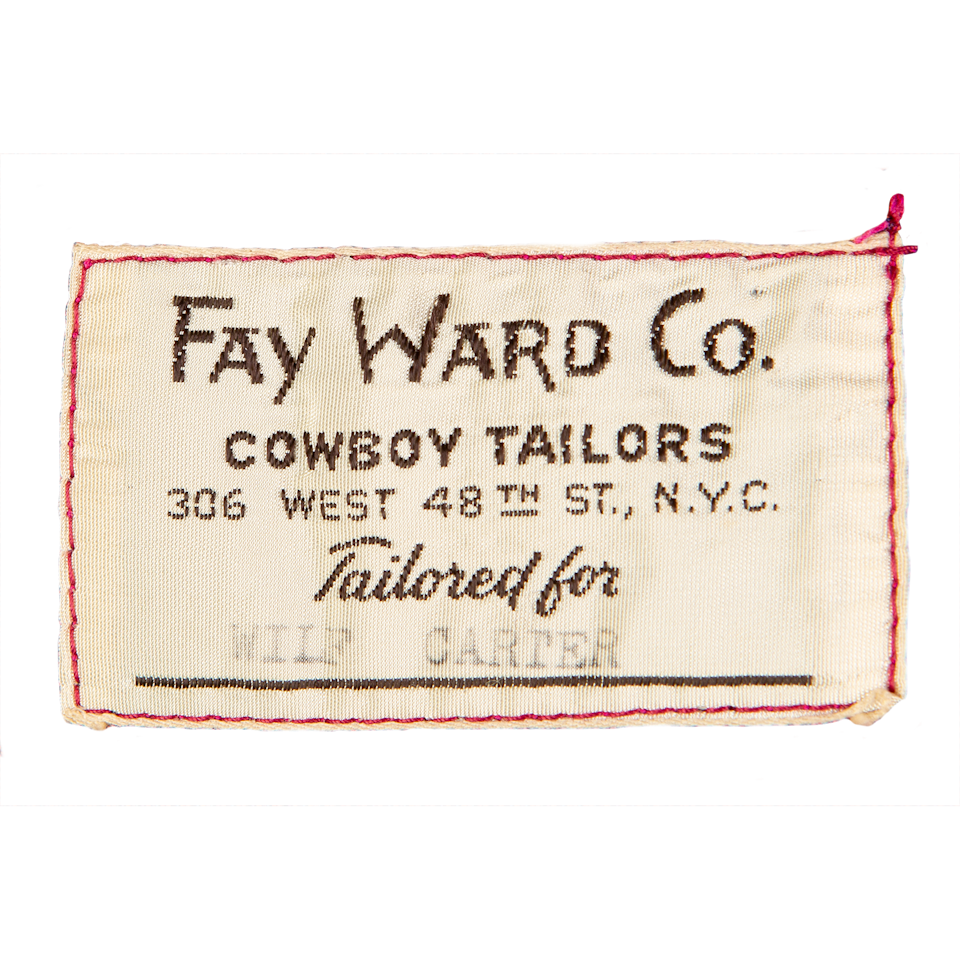
“The Best in Western Garb” was more than a shop name. It was a promise printed beside a New York address: Fay Ward Co., Cowboy Tailors, 306 West 48th Street. The same phrase appeared in advertising and on a garment label. One invited a customer to order; the other travelled with a piece of clothing. Together they let us see how a Manhattan business made itself legible to customers far beyond its block.1, 2
A tailor in the city
A January 1946 buyer’s guide lists “Fay Ward, Cowboy Tailor” among sellers of Western and farm clothing. Later advertisements offer illustrated catalogues, custom work and parade outfits, and address customers in rodeo, radio, television, records and film. A 1960 Country Music Who’s Who advertisement still gives the West 48th Street address and offers everything from a shirt to a complete suit. The repeated address sketches a business built to reach performers whose work took them across the country.3, 1, 4
Ward’s route to New York began, in the Country Music Hall of Fame’s account, with a life in the West. The museum describes him as a former rodeo contestant who went to Manhattan during the Depression seeking a publisher for The Cowboy at Work, a book he wrote and illustrated. After attending the Madison Square Garden rodeo, he opened a Western-wear shop. The same account says that he later sold the business and moved to Arizona in the 1950s. It is a maker’s biography shaped by ranch, rodeo, publishing and city life, all meeting at a tailor’s counter.5
The Hall of Fame begins that account earlier still: Fay Ward was born in Adelaide, Iowa, in 1888, to parents who performed in Wild West shows. It says that, after he was placed with a foster family in South Dakota at eight, he ran away to ranch work, lived for a time on a Sioux reservation and spent more than a decade as a rodeo contestant. The passage gives the later shop a particular emotional geography. Ward’s New York address belonged, in the museum’s telling, to a man whose experience of Western work and performance had begun far from the garment district.5
That is the museum’s biographical reconstruction, rather than a newly examined sequence of vital, foster-care, ranch or rodeo records. It offers an identified life story for the tailor while leaving the programme’s separately documented 1901, 1916, 1918, 1920 and 1936 shared-name records where their own sources leave them.5, 6, 7, 8, 9, 10
The shop’s place in the street appears in a New-York Historical Society finding aid, which describes “Fay-Ward Cowboy Tailors” above Pierre au Tunnel French Restaurant on West 48th Street. The archive description gives a vivid address in words: Western tailoring over a French restaurant in midtown Manhattan. It does not supply an item-level date for the photograph, so the street view belongs to the business’s documented setting rather than a precisely dated moment.11
A name already on the rodeo circuit
A 1901 Billboard notice records “Fay Ward and sister” leaving the Rhoda Royal Shows for Orrin Bros.’ Circus in Mexico City. It is an early glimpse of a name moving through touring entertainment. The notice does not identify that performer with the New York tailor, whose clothing business appears in a later record.6
Long before the New York buyer’s guide, a 1916 Billboard exchange discusses a photograph of a Fay Ward in a Chicago magazine. The question asks whether the pictured bronc rider was a man or a woman. The columnist answers that Ward was male, while acknowledging he did not know the rider personally. A 1918 Fort Worth results column lists Fay E. Ward among the bronc riders. Read together, the notices may trace one performer, but the surviving names do not by themselves connect the rodeo rider to the later tailor.7, 8
The name appears in rodeo results again in 1920, at the Carthage Roundup. In 1936, Billboard included a Fay Ward in a New York Cowboy and Indian Social Club membership-drive item. A Harry Ransom Center finding aid also lists Ward among the sitters in portraits of rodeo personalities. The notices and archive description give the performer’s name a life in rodeo print and photography; the tailoring business becomes visible in a different stream of evidence.9, 10, 12
By January 1946, a buyer’s guide lists “Fay Ward, Cowboy Tailor” at 306 West 48th Street. In 1953, advertisements speak directly to working entertainers and offer a catalogue. The tailoring story is clearest at that New York address, after years in which the name had travelled through rodeo and show business.3, 1
Clothes designed for the act
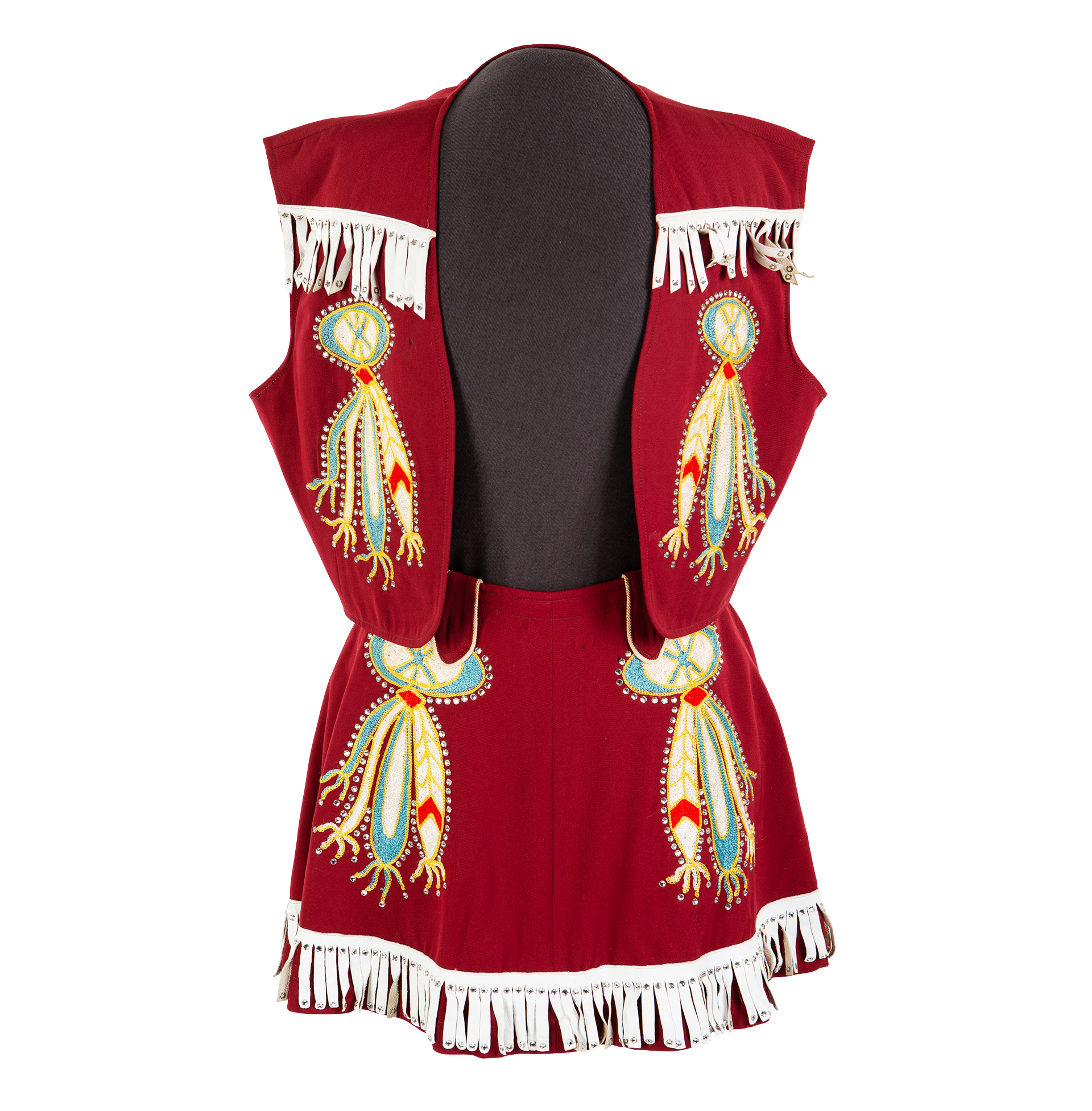
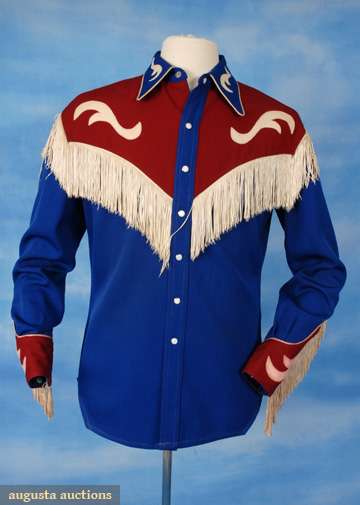
Ward’s advertisements addressed a broad performance economy. A parade outfit, a Western shirt and a full suit could serve different occasions, while the mail-order catalogue offered a way to reach customers without a visit to the shop. The Hall of Fame presents garments connected to Kay Arnold, Wilf Carter and Jerry & Sky, making the printed offer visible in particular clothes.1, 4, 5
On one museum-presented ensemble, Ward’s label names Kay Arnold. The Hall of Fame describes her vest and skirt with contrasting fringe, rhinestones and embroidery. Wilf Carter’s outfit uses contrasting cord piping and “smile pockets” with arrowhead stitching. Schuyler “Sky” Snow’s shirt has embroidered flowers and six-snap shotgun cuffs. These details are not simply decoration added to a generic cowboy suit: they shape the garment’s lines and help build a recognisable stage appearance.5
Jerry & Sky worked in the Northeast through the 1940s and 1950s, and the museum identifies Ward as a source of much of their stage wear. Its presentation includes a pinstripe ensemble for Snow. This is an important counterpoint to the image of Western tailoring as a distinctly Californian trade. Ward’s shop belonged to New York’s garment world and to a regional circuit of radio and live performance at the same time.5
The label travels
An auction-presented garment carries a label reading “The Best in Western Garb / Fay-Ward / Cowboy Tailors / 306 West 48th St. / New York City.” That wording can be compared with the shop’s printed advertisements, which use the same address and phrase. The label is evidence of what appears on this particular garment; its date, first wearer and route into the sale remain outside what the label alone can tell us.2, 1
The most telling feature of Ward’s surviving record may be the distance it covers. A cowboy tailor worked above a Manhattan restaurant, illustrated catalogues carried his name to customers, and garments turned up in the wardrobes of country performers across the continent. West 48th Street was not the edge of the story. It was the point from which the clothes travelled.11, 3, 1, 4, 5
Sources
- Down Beat, 18 November 1953
- Augusta Auctions, October 2008 past-sale listings, lots 694, 696, 697 and 700
- Rosin the Bow, vol. II, no. 1 (January 1946)
- Country Music Who’s Who, 1960
- CMHOF, “Western Style Roundup”
- Billboard, 19 January 1901
- Billboard, 22 April 1916, “Wild West Wisdom & Frontier Frivolity / The Corral,” p. 24
- Billboard, 6 April 1918
- Billboard, 28 August 1920
- Billboard, 22 February 1936, Internet Archive scan
- New-York Historical Society stereograph finding aid, PR-065-0321
- Harry Ransom Center, Frederic Allen Williams Lantern Slide Collection finding aid