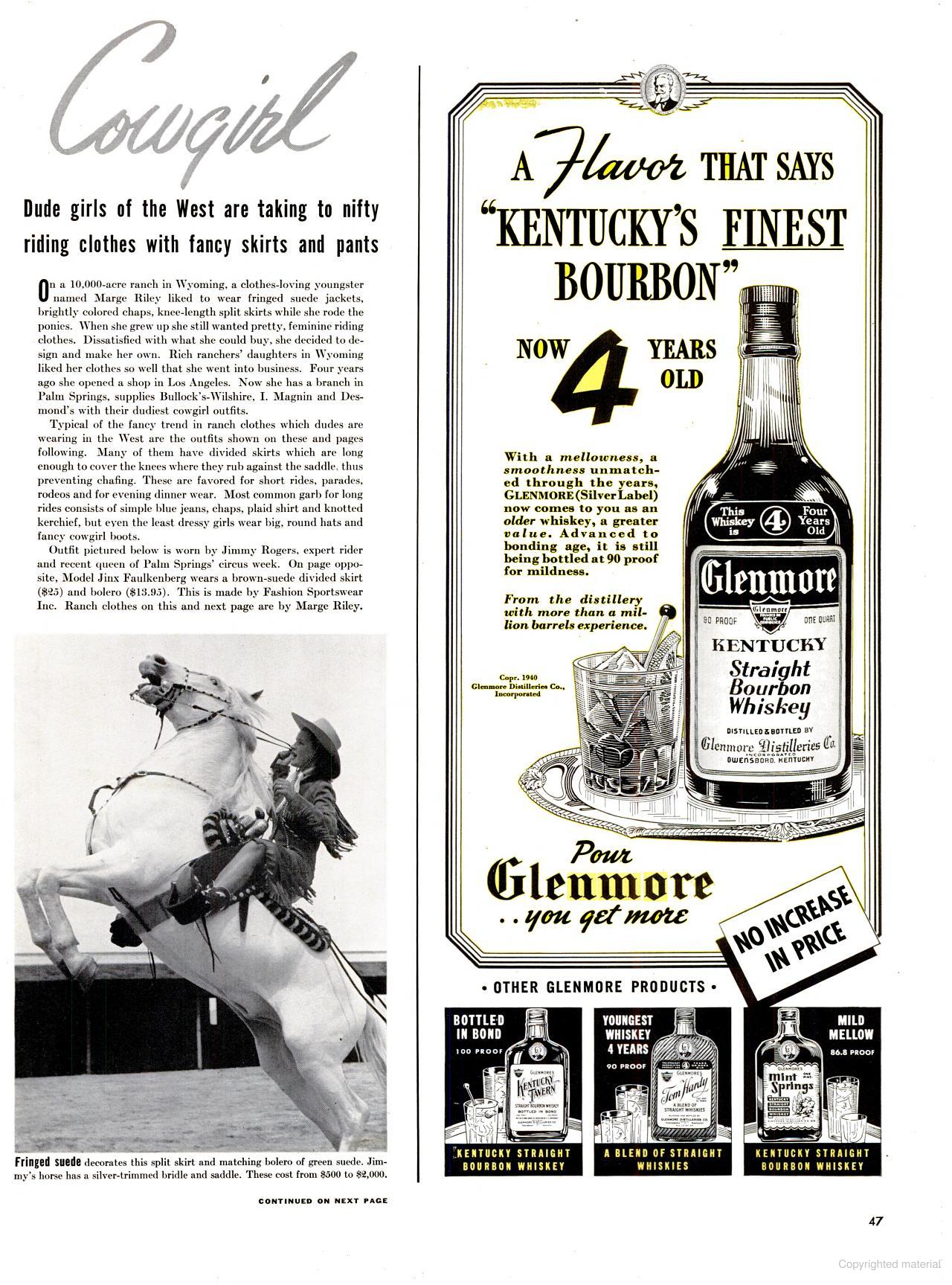
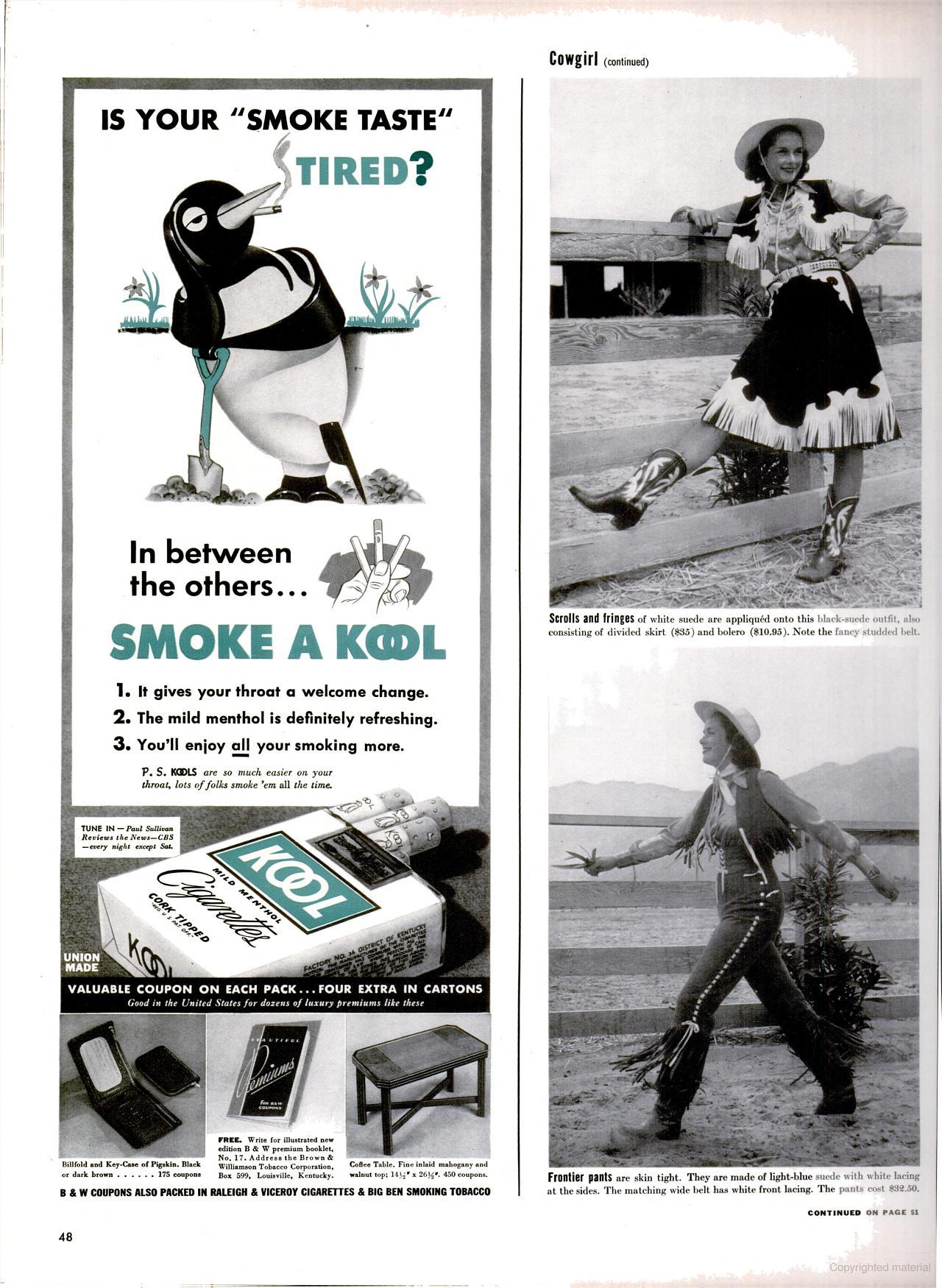
In April 1940, Life magazine gave three pages to “Cowgirl” fashion and credited the clothes to Marge Riley. The illustrations moved between a green-and-black suede divided skirt and bolero, white-suede scrollwork and fringe, and light-blue frontier trousers laced down the sides. These were recognisably Western forms, but the spread treated colour, surface and silhouette as fashion. Riley’s name reached readers who might never have seen a rodeo or a ranch.1
From Wyoming to a Los Angeles shop
The Country Music Hall of Fame places Riley’s work in the early 1930s, when she began making fancy Western wear and soon made outfits for neighbouring ranch girls. In 1936 she opened a Los Angeles shop. By the time Life profiled the clothing, the business had a Palm Springs branch and supplied Bullock’s-Wilshire, I. Magnin and Desmond’s. The spread offers a rare view of the business at the point where specialist Western clothes entered prominent city stores and the national fashion press.2, 1
The magazine’s language gives a sense of how Riley was presented to a national audience: a working cowgirl who had learned how a proper dude-rancher ought to dress. That is the period feature’s portrait, not a neutral biography. Beside it, the pictured garments make a quieter argument. The divided skirt and laced trousers draw on riding clothes, while suede, contrast and appliqué turn those forms into outfits meant to be seen. Practical reference and deliberate display live together on the page.1
The Hall of Fame associates Riley with Gene Autry, Dale Evans and steel guitarist Bonnie Dodd, and describes her clothes with contrasting fringe and leather appliqués. Its Dodd section brings the attribution into a scene: the museum captions a drawing of Dodd performing at San Diego’s El Rancho, circa 1946, made by a U.S. Navy sailor, and says Riley created the outfit Dodd wore. The caption dates the drawing; it does not date a surviving garment or record a commission. Still, the pairing puts Riley’s work in the orbit of a working musician, on a stage in a particular city.2
A 2007 True West collecting feature tells another performer story through an auction report. It describes a shirt as Roy Rogers’s “first fringe shirt,” attributes it to Riley and dates it to 1947; it also reports the related magazine and comic-book material sold with the lot. That is the magazine’s account of a collector’s object, placing Riley’s name in the story of a famous cowboy image and its later market.3
A second address in Palm Springs
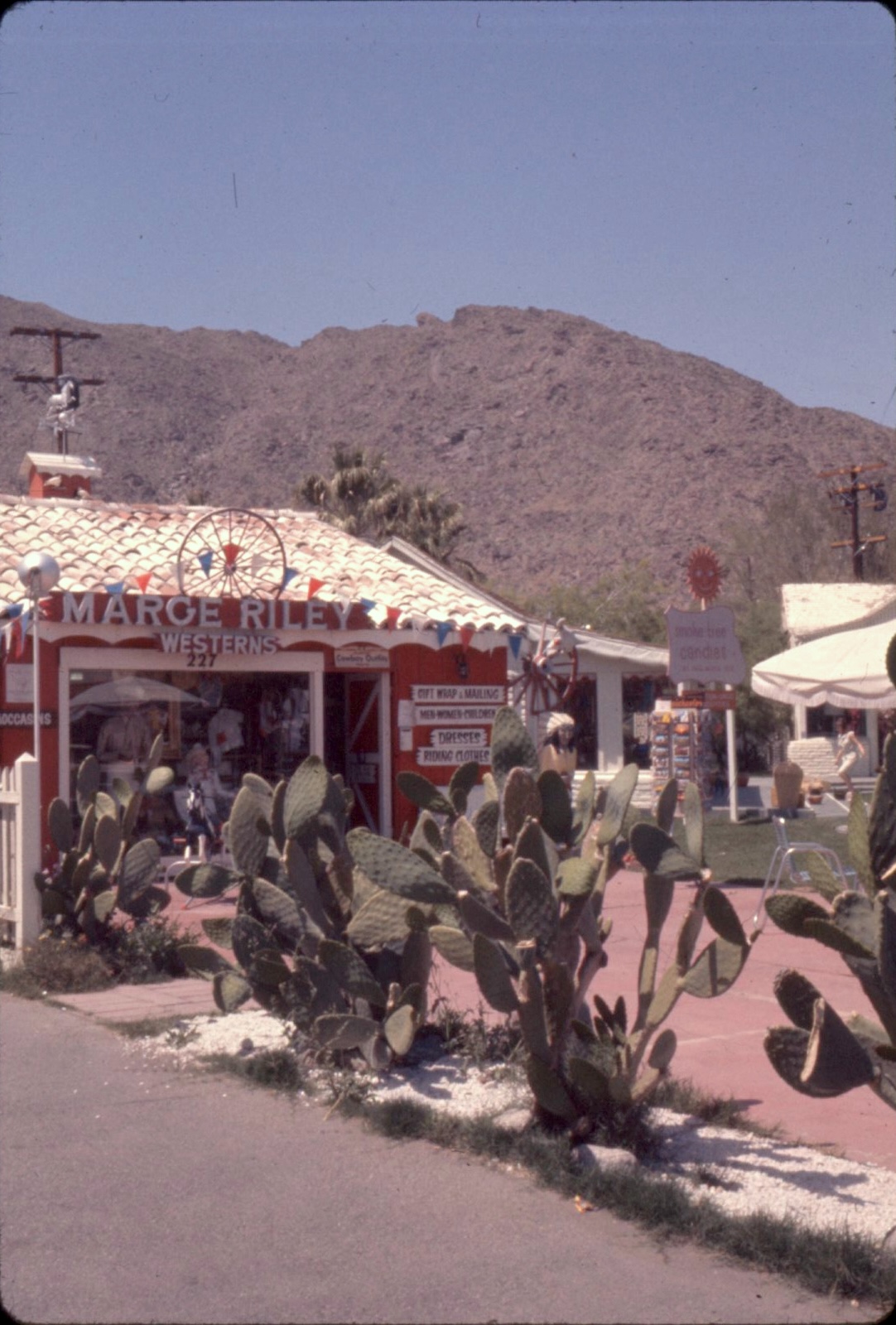
Palm Springs directories give the shop several closely related forms. The 1964 city directory lists “Marge Riley Western Riding Clothes” at 227 South Palm Canyon Drive and names Marge Carr in the entry; a separate Carr household listing uses “Marge Riley Western Shop.” In 1966, the telephone directory lists “Riley Marge Westerns” at the same address. Across the printed entries, the business name appears beside one Palm Canyon location.4, 5
Three slides presented by Deserted Films show storefront lettering that reads “MARGE RILEY WESTERNS” and “227.” The host dates the Village Green sequence to April 1964. Read beside the directory entry, the sign gives the Palm Canyon address a visible commercial presence. The photographs are host-presented images, so their date and location remain the host’s identification; the lettering itself is what can be read in the frames.6, 4
A wardrobe between use and display
Riley’s story does not sit neatly inside a distinction between workwear and costume. The Life spread draws on riding forms, yet places those clothes in a fashion magazine and connects them to department stores. The Hall of Fame’s performer attributions add another setting: stage wear for entertainers. A divided skirt, a shop-window outfit and a singer’s costume could all belong to the same wider trade in Western style, while serving different bodies and occasions.1, 2
From Los Angeles to Palm Springs, Riley built a business whose clothes moved through ranch fashion, retail and entertainment. The magazine pages preserve the designs as images; the directories preserve the shop names and address; the museum exhibition connects an outfit to Bonnie Dodd. Each record catches a different part of the work. Together they show a maker whose Western wear crossed the boundary between the clothes people imagined for the West and the garments they could buy and wear in California.1, 2, 4, 5